
"climate impact on coffee"
1000 article(s) found

Why are Arabica coffee beans more advanced? are Arabica coffee beans dying out?
Professional coffee knowledge exchange more coffee bean information Please follow the coffee workshop (Wechat official account cafe_style) Why all kinds of coffee are promoting 100% Arabica coffee beans, whether ground or ready-to-drink, saying that they are Arabica coffee beans? does this taste really best suit the Chinese people? We can see selected Allah in many places where freshly ground coffee is sold.

What's the difference between large batches, micro batches and nano batches? the smaller the batch, the better the quality?
Quality, traceability, direct trade, reasonable price, unique flavor and good handling are the excellent properties of single coffee and micro-batch coffee. But if you put aside these definitions, do you know what "single origin" means? What is the difference between a single manor, micro-batch or even nano-batch? And how can producers make sure that micro-batches are not mixed with other batches of coffee?

Seven reasons affecting the aroma and flavor of coffee: the brewing method of environmental roasting degree of coffee beans
As coffee lovers, we know that you can find a wide range of features in coffee. From simple tones to sweet fruit, to flowers and tea, our favorite drinks bring an incredible taste experience. But what determines the flavor of your coffee? There is no simple answer to this question. The science behind the flavor of coffee is still in place.

How old is coffee growing in Brazil?| Brazilian coffee beans are expensive.
Professional coffee knowledge exchange More coffee bean information Please pay attention to coffee workshop (Weixin Official Accounts cafe_style) As we all know, Brazil not only has the reputation of football kingdom, Brazil is also a country surrounded by palm trees and coffee. Some people call Brazil a giant and monarch in the coffee world. Brazilian coffee history Brazilian coffee production is the world's highest, but also the world's

Introduction to Hasunda Coffee Garden
In 1535, Flatoma de Belanga and others of Spain stumbled upon the Galapagos Islands. Thomas was born in 1487 on the Duro River in the province of Soria, Spain. He was the fourth bishop of Panama at that time. He was ordered to go to Peru. When his ship set sail from Panama on February 23, under the impact of a strong current, they were taken to the unknown surface of the ocean.
Costa Rica urgently needs to stimulate the coffee industry
Due to the decline in coffee prices on the international market, Costa Rican coffee exports totaled US $306 million in 2015, down 26% from US $412 million in 2012, Costa Rica reported on May 12. In the first quarter of 2016, the average world price of coffee was $1.14 per liter, down 26 per cent from the same period in 2014. Affected by climate change and diseases and insect pests at the same time, the coffee growing area of Colombia

Asalia in Sika, Kenya, gives a detailed introduction of hand impact temperature, degree of grinding and powder-to-water ratio.
The exchange of professional baristas please follow the coffee workshop (Wechat official account cafe_style) Kenyan coffee, known as the connoisseur's Cup (Connoisseurs Cup), is famous in the coffee industry for its rich aroma, bright and vibrant acidity, full and elegant mellowness and red wine flavor. Caffeine in different producing areas has its own subtle flavor due to the difference of microclimate. Ken

Panamanian Kasha Coffee Grinding degree Taste characteristics introduction of Fine Coffee Flavor
Central America is a long isthmus from northern Mexico to southern Colombia, connecting North and South America. Panama is located in the southernmost part of Central America, so the country runs from east to west, not from north to south as people think. This means that the coast of the Caribbean (Atlantic) is in its north, while the Pacific is in the south. So far, Panama also shares the Atlantic Ocean.

Introduction to Hasunda Coffee Garden in Ecuador
In 1535, Flatoma de Belanga and others of Spain stumbled upon the Galapagos Islands. Thomas was born in 1487 on the Duro River in the province of Soria, Spain. He was the fourth bishop of Panama at that time. He was ordered to go to Peru. When his ship set sail from Panama on February 23, under the impact of a strong current, they were taken to the unknown surface of the ocean.

Introduction to Hasunda Coffee Garden in Ecuador
In 1535, Flatoma de Belanga and others of Spain stumbled upon the Galapagos Islands. Thomas was born in 1487 on the Duro River in the province of Soria, Spain. He was the fourth bishop of Panama at that time. He was ordered to go to Peru. When his ship set sail from Panama on February 23, under the impact of a strong current, they were taken to the unknown surface of the ocean.
Costa Rica stimulates the main force of the coffee market
Due to the decline in coffee prices on the international market, Costa Rican coffee exports totaled US $306 million in 2015, down 26% from US $412 million in 2012, Costa Rica reported on May 12. In the first quarter of 2016, the average world price of coffee was $1.14 per liter, down 26 per cent from the same period in 2014. Affected by climate change and diseases and insect pests at the same time, the coffee growing area of Colombia

What should I do with the coffee grounds after brewing coffee? There are four uses of coffee grounds you don't know.
We know that the coffee industry has an impact on the environment. From planting, processing to transportation and roasting, each step of the coffee supply chain consumes a certain amount of energy, so it has its own carbon footprint. But what about the waste we produce when we drink coffee? Especially our waste coffee grounds? They are inevitable by-products of coffee consumption. Although many of us think it has something to do with

Introduction to the varieties of Galapagos Coffee Manor with faint floral and fruity aromas
The Galapagos archipelago is now designated as a national park by Ecuador and listed as human property by UNESCO. It is far from land and largely avoids the impact of human behavior on nature. In order to maintain the local natural ecology as much as possible, Ecuador legally forbids the use of all kinds of artificial fertilizers, herbicides and pesticides, so Galapago
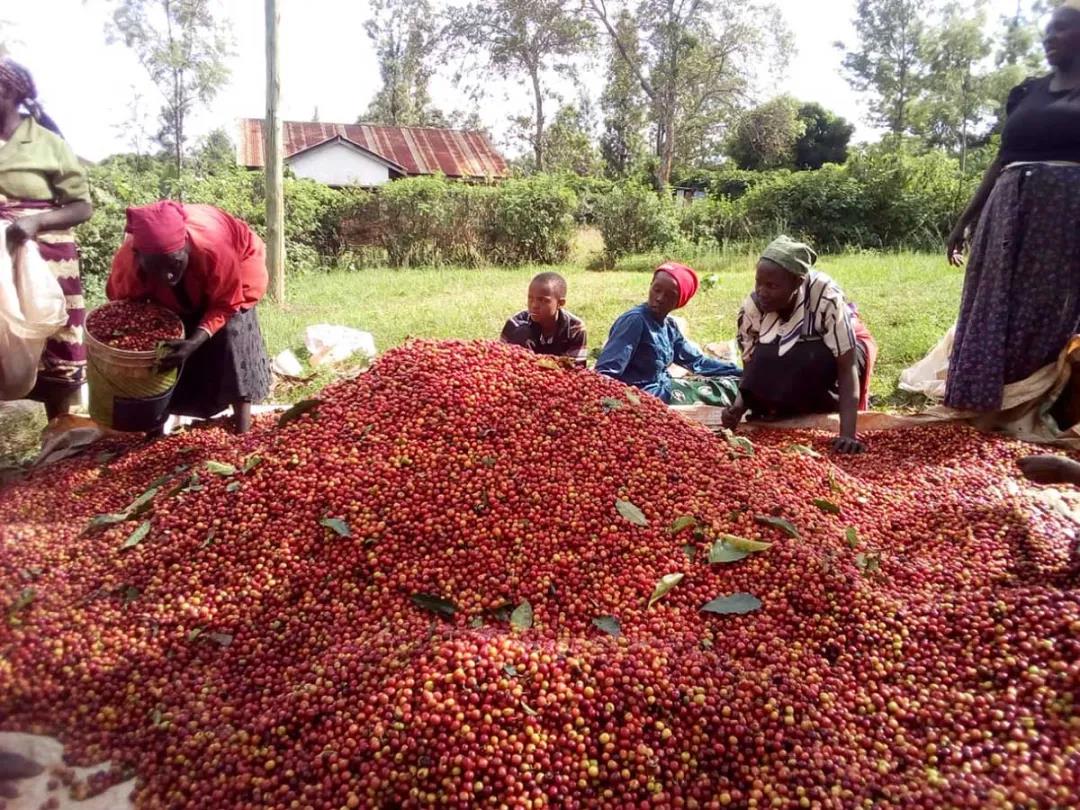
The quality of coffee production in Kenya is low? The government plans to revitalize coffee growers through coffee futures
Professional coffee knowledge exchange more coffee bean information Please pay attention to the impact of climate change in coffee workshops (Wechat official account cafe_style) and the serious governance strategies of coffee cooperatives in Kenya are affecting the performance of the coffee industry in Kenya, and COVID-19 is undermining the performance of the country's coffee export market. According to the data of the United States Department of Agriculture (USDA), since coffee is mainly used in 2020,

Effect of Climate on Coffee Price and Flavor
We all believe that climate change affects the world, but few of us believe that climate change will affect us. We all believe that climate change affects the world, but few of us think that climate change will affect us. But when warm winters and severe storms hit, the effects of climate change will be understood. What will global warming bring to coffee? Climate warming will make bacteria and diseases
Boutique Coffee Costa Rica urgently needs to stimulate the coffee industry
Due to the decline in coffee prices on the international market, Costa Rican coffee exports totaled US $306 million in 2015, down 26% from US $412 million in 2012, Costa Rica reported on May 12. In the first quarter of 2016, the average world price of coffee was $1.14 per liter, down 26 per cent from the same period in 2014. Affected by climate change and diseases and insect pests at the same time, the coffee growing area of Colombia


Floral and fruity Galapagos Coffee Bean Flavor Taste Aroma Description
This is where Galapagos Coffee is different, because the archipelago is located in a very special position, at the intersection of the Peruvian cold current in the south and the equatorial warm current in the north. Affected by the cold and warm currents, a small ecological environment has been formed locally. The climate here at 500 meters is equivalent to the climate of 900-1800 meters inland. This terrain is ideal for very hard coffee beans (SHB) with high acidity.

Puerto Rican coffee producing area Puerto Rico coffee bean flavor
Coffee trees were introduced to Puerto Rico (PuertoRico) from Martinique in 736. Most of the early coffee was grown by immigrants from Corsica. Coffee farms were once prosperous in the 19th century, but the rise of sugarcane and crop farming and the impact of hurricanes and wars made the coffee industry lag behind and is now recovering. The origin of coffee in Puerto Rico: Puerto Rico is the most

Ecuadorian Coffee Flavor Taste Manor area introduces boutique coffee beans
In 1535, Flatoma de Belanga and others of Spain stumbled upon the Galapagos Islands. Thomas was born in 1487 on the Duro River in the province of Soria, Spain. He was the fourth bishop of Panama at that time. He was ordered to go to Peru. When his ship set sail from Panama on February 23, under the impact of a strong current, they were taken to the unknown surface of the ocean.